
Interview on “The Meaning of Life: A Quick Immersion”, and Its Persian Edition in Iran
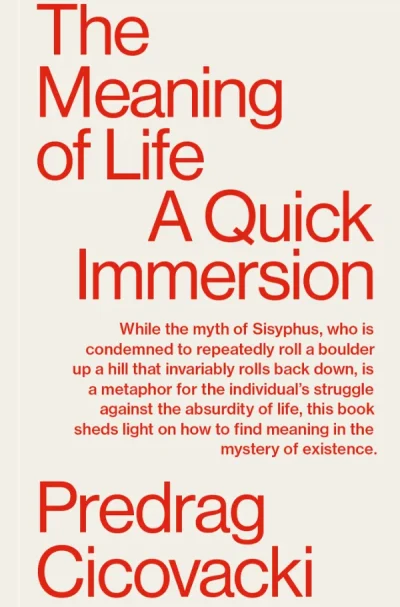
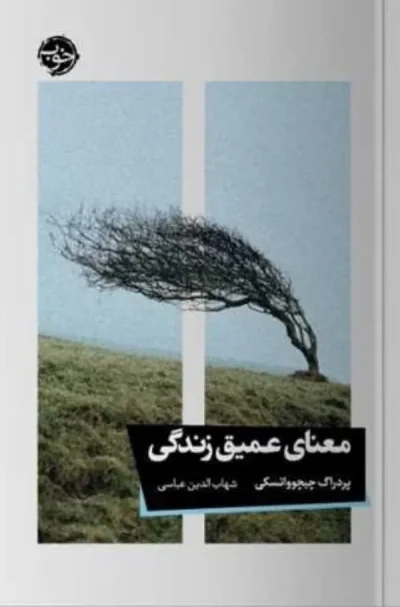
The book “The Meaning of Life – A Quick Immersion” and its Persian edition and translation
Short Description
This is an interview regarding the professor’s book on the meaning of life (The Meaning of Life: A Quick Immersion), on the occasion of its publication in Persian in Iran.
Download the interview in PDF:
Take a look at various editions of this book in different languages.
Read the full interview here:
In September 2025, I was contacted by Mohammad Javad Ostadi, a cultural studies researcher and journalist specializing in intellectual discourse in Iran, who invited me to respond to a series of questions about my book The Meaning of Life: A Quick Immersion. Along with his questions, he sent me a copy of a Persian translation of the book, whose existence was, until then, unknown to me. The questions were received on September 19, and I sent my responses on October 3, 2025. The interview was intended for publication in Iran, although I do not know whether or where it subsequently appeared. What follows is the English version of our exchange.
Interview Questions for Professor Predrag Cicovacki
– What motivated you to write a book titled “The Meaning of Life: A Quick Immersion”? Was your aim primarily to provide an introductory overview for a general audience, or to present your own personal perspective on this fundamental question?
This book was written in the summer of 2020. It was the first year of the COVID-19 pandemic, and it was also the year in which I lost my best friend. He died in my arms on an airplane as we were returning together from India, where he had fallen ill. For me, it was a summer of confusion and mourning. It was also a summer of reflection, and those reflections, in one way or another, kept leading me back to the question of the meaning of llife. After several months of this, I felt an urge to share my own perspective on this perennial question of meaning, and the first draft of the book was written in one intense, volcano-like burst over the course of a few weeks. (The later editing of the book took much longer.)
– Many argue that “the meaning of life” is among the deepest and most complex questions in philosophy. Doesn’t presenting it in a “quick” and condensed format risk over simplification? How did you balance brevity with depth?
Indeed, it is one of the deepest and most complex, as well as one of the most important, questions. It is the kind of question that can lead a person to pursue philosophy and study the works of the greatest minds of humankind. When I was a philosophy student, I could only hope that one day I might arrive at an answer of my own to this eternal question. Can such questions be answered satisfactorily in a quick and condensed form without risking oversimplification? Yes, they can. The length of a response is no guarantee of its adequacy. In fact, the most impressive and memorable answers are often those that are “quick”—as the poems of Rumi, the short dialogues of Plato, or some of the most memorable passages in our holy books testify. There is no recipe for balancing brevity with depth. Often we do not succeed, but sometimes we are inspired—and fortunate enough—to achieve that balance. It is up to my readers to judge whether I have succeeded in doing so in this book.
– In the book, you survey different philosophical traditions. Do you think philosophy is still the best avenue for exploring life’s meaning, or should theology, literature, and the arts be regarded as equally important guides?
Philosophy is one of the avenues through which the question of life’s meaning can be explored. It has never been the only one, although in some periods of our historyphilosophy has been regarded as the primary path to follow. Religion and theology, as well as literature and the arts, have always been important in this pursuit. We live in an age in which the examination of life’s meaning calls for a collaborative approach, drawing on many disciplines and many ways of experiencing life.
– Critics have suggested that your book leans heavily on Western traditions. Was this a deliberate choice? Where do you see the place of Eastern and Islamic traditions in the search for meaning?
Let us not forget that I am a product of the Western tradition. It should therefore come as no surprise that I know this tradition better than any other. Generally speaking, we should approach such difficult and important issues from the standpoint of what we know best and what we have experienced personally. But in the book I also draw on other traditions that I know fairly well, especially the Chinese and Indian traditions. The ancient Chinese sage Mencius is mentioned at the very beginning of the book. Taoism has been an inspiration to me for the last several decades, and in the book I also express my deep admiration for Gandhi and Tagore, and for the Indian tradition as a whole. Unfortunately, I am less familiar with the Islamic tradition, but I hope that this will change in the future.
– One strength of the book is its clear, pedagogical structure. Do you view this style of writing as a response to the widening gap between academic philosophy and the general public?
There is indeed a widening gap between academic philosophy and the general public. At the beginning of my academic career, I too wrote like an academic philosopher, but I was never satisfied that educated people outside the discipline found my books difficult to read. In my subsequent works, I have made a conscious effort to close that gap as much as possible.
– You describe the meaning of life more as a “search” than a definitive answer. Could this approach be seen as overly relativistic, potentially leaving readers more confused than enlightened?
We have no definitive justification for assuming that there must be one, and only one, definitive answer to the question of the meaning of life. But even if there is such an answer, it may be wisest to approach it—symbolically speaking—like a recipe for a tasty dish that we ourselves have to cook. In doing so, we must consider not only the recipe but also the ingredients available to us and the cooking skills we possess. Those ingredients and skills vary, but that does not imply relativism. The intended message is rather that, even when we know which path to follow, we must be actively involved in following it, moving toward its destination to the best of our abilities. It is less important exactly how we describe this involvement: as a search, as a realization of our destiny, or as the fulfillment of our vocation. What matters is that we are moved from within to pursue such an endeavor with all the seriousness and dedication we can muster.
– Some critics claim that your book provides more of a map of viewpoints than a personal response. Do you yourself have a concrete answer to the question of life’s meaning, or are you still searching?
The four main chapters in the book are called “Merit,” “Luck,” “Gratitude,” and “Inspiration.” I think of these four as signposts that are valid for all of us—or at least for most of us—but that I have identified through the years of my own quest. I would not call what I present in the book a map. A map is shaped by the circumstances of our lives and by our gifts and dispositions, which may differ as greatly as our countries and cultures do. I would rather say that these four signposts form a coordinate system that can be applied to any human life, regardless of its specific circumstances and personal dispositions. I leave it to my readers to decide whether I have a concrete answer to the question of meaning or whether I am still searching for it.
– How can we evaluate the meaning of life? Is there an objective criterion, or is it entirely a matter of personal, subjective experience?
I do not believe in an exhaustive dichotomy between the objective and the subjective, especially if the former is understood in terms of scientific criteria and the latter as something purely personal and valid for one person only. In every experience of life, we encounter elements that have features of both subjectivity and objectivity. What I present in the book relies heavily on that gray area between objectivity and subjectivity, for which we do not have an adequate vocabulary in any commonly used language, but which we can nevertheless understand regardless of the specific language we speak. This is why I open the book with the ancient idea of Mencius that there is a common heart of humanity, a mixture of mind and heart that we all share, even though it assumes particular nuances in every individual—including people who live at the same time and in the same place, members of the same family, and even identical twins. Somehow, we all have the capacity to recognize the suffering of others and to be moved by it, just as we can recognize the power of love, honesty, and loyalty, regardless of the particular forms in which they are manifested. As surprising as it is that people of all ages and cultures have such similar capacities and longings, it is equally surprising that each of us possesses them in a unique way. That is the beauty—or perhaps better, the secret—of the challenge we face: to find the
meaning of life.
– You highlight the role of ethics and values in giving life meaning. In today’s world, dominated by moral relativism and radical individualism, how can a shared or common meaning be found?
Any discussion of the meaning of life must deal with values and ethics, because the meaning of life is essentially concerned with the quality of life and human flourishing. It is indeed the case that our world is dominated by moral relativism and radical individualism, conditions in which a shared or common meaning cannot easily be found—if it can be
found at all. Nevertheless, I am convinced that it can. I very much agree with the German philosopher, theologian, and poet Johann Gottfried von Herder (1744–1803), who maintained that “we all must be human in our own way.” There is much that we share, and that is our humanity. There is also something unique in each of us that needs to be cultivated. This idea leads us between—or perhaps better, beyond—objectivity and subjectivity, absolute and relative values. No matter what you do or how you live, never forget that you are a human being and a member of the human race. Yet, while respecting your own humanity and the humanity of others, do not neglect your own gifts and dispositions, your own path in life, your own calling and vocation.
– In Iran and the Islamic world, life’s meaning is often tied to concepts of worship and closeness to God. How do you view this religious interpretation of meaning?
Religion is as old as the human race, and that is no accident. Religion is an essential aspect of human existence, and when we turn our backs on it, we may make our lives more difficult and sometimes even lose our sense of orientation. By directing us toward something higher than ourselves, religion instills a sense of humility and provides a sense of direction. In the secular world, such guidance is often replaced by substitutes—money, social status, political power, and personal pleasure—that may satisfy us for a while but ultimately cannot answer our deepest longings. We can see this when people, especially as they grow older, turn away from the substitutes that our civilization constantly manufactures and multiplies for us and discover—or rediscover—religion. They slow down their pursuit of material goods, whether needed for survival or for a comfortable existence, and realize that they need more than life’s comforts. Much more. Religion has traditionally responded to that need.
– Many young people today struggle with nihilism and despair. Does your book offer them any practical guidance, or is it mainly a theoretical and contemplative work?
Nihilism and despair are so widespread that we can speak of an epidemic throughout the world—one whose consequences can bedevastating. My book does not offer any “vaccine” against this epidemic, nor could there be one. It is an invitation for each of us to confront our own life openly and honestly, to look into ourselves and our world, and to try to gain a better understanding not only of who we are but also of why we are here. I would say that my book is neither merely practical nor purely theoretical. It is an exploration of our common human experience, seen through the lens of my own life journey.
– Why do you think the question of life’s meaning has re-emerged in the 21st century as a central concern of both philosophy and psychology?
It has re-emerged as a central concern because it reflects the way we live—our experiences of despair and loneliness, our diminished trust in institutions, and our growing dissatisfaction with a consumerist way of life. In the 1990s and the first decade of the twenty-first century, there was a flood of research and publications about happiness rather
than the meaning of life. But the pursuit of happiness, as we often understand it in the Western world, can itself become part of the consumerist culture that has emptied our lives of deeper meaning. When happiness is treated as something to be acquired or secured, the very pursuit of it can contribute to our sense of disorientation, emptiness, and loneliness. The quest for meaning must go much further and deeper than our longing for happiness: while we may still entertain the illusion that happiness can be bought, meaning cannot be purchased. The quest for meaning must come from a different source. It requires an honest confrontation with ourselves and a critical reflection on our entire way of life. As our crises have deepened and spread despite our efforts to “secure” happiness for ourselves, we have come—more intuitively than consciously—to understand that our malaise has deeper causes and requires a more radical change in how we live and in what we believe.
– Should the meaning of life be understood as one universal meaning applicable to all, or can each individual construct their own personal meaning?
There are elements of the meaning of life that are universal, and there are aspects of it that address our unique personalities and abilities. I do not believe that we simply “construct” life’s meaning. The meaning of life is not the result of planning and execution. It is more a by-product of a proper way of life: of understanding who and where we are, what is demanded of us and what we can offer, and of finding the right measure between living as human beings and honoring the unique gifts we possess. Meaning emerges from the right way of life, and we can recognize it when we see a person radiate health, goodness, kindness, devotion…
– If human life is short and finite, is speaking about “meaning” a rational endeavor, or merely a way to soothe existential anxiety?
Life is indeed short and finite, fragile and transitory. The meaning of life is not the result of a purely rational endeavor, nor is it merely a way of soothing our existential anxiety. It comes from an integrated effort and a dignified way of life. It comes from a way of life that feels “right” and reveals itself through the inner radiance of a person. It comes from being who we are and living true to the inner core of our being, while also living in harmony with the best that our societies and traditions teach us. Ultimately, our inner truths and the most important values we encounter in the world must converge: they must enhance and enrich one another rather than conflict and pull us in opposite directions. We can see this in great people such as Albert Schweitzer, whom I describe in this book as one of my teachers and inspirations.
– You emphasize the importance of “immersion” in the question of meaning. How does this term differ from ordinary philosophical reflection or contemplation?
However important reflection and contemplation may be, they can remain at the level of thought. Immersion means not so much going further than reflection and contemplation as living out those reflections and contemplations, embodying them in our lives, allowing them to vibrate through our entire being and guide us toward a meaningful life. For more than two thousand years, the Western tradition has distinguished between what are called vita contemplativa and vita activa—a contemplative way of life and an active way of life. The point, however, is to bring them together, to integrate them, and to allow both to become equally important and indispensable parts of our lives.
– One criticism of the book is that it lacks sufficient historical depth and functions more as a quick overview. How would you respond to this critique?
This book is part of a series that provides quick overviews of important topics. That is how the entire series is designed. Other titles in the series include Ethics, Religion, Nonviolence, Beauty, and so on. The publisher asked me to write a book that would provide a quick overview, and that is what I have done.
– Has the meaning of life changed in modern and postmodern times—for example, shifting from collective meanings (religion, nation, family) to more individual ones (personal success, happiness)?
Yes, the meaning of life has changed, and precisely in the direction you describe. In earlier times, what mattered most was the society and family into which we were born, as well as the gender roles into which we were born. These imposed definite expectations and roles upon us, and one could find meaning in life by fulfilling an assigned role with humility and devotion. Since the beginning of modernity, the emphasis has shifted toward our individual characteristics, gifts, and dispositions. In fact, it has shifted so far that today we place much greater emphasis on the individual dimensions of life, particularly on personal success and happiness. Yet we often do so to such an exaggerated degree that we lose our roots, the ground on which to stand, and the values that should guide us through life’s struggles. Individualism has become such a malaise of our age that the perceptive Western theologian Thomas Merton declared that “The person must be rescued from the individual.” By “person,” he means a combination of respect for our common humanity and the development of individual uniqueness, similar to what I described earlier when discussing Herder. The exaggerated individualism of our time overlooks and ignores our common humanity, which in earlier times was the main—and often the only—thing that mattered.
– You reference thinkers such as Nietzsche, Camus, and Tolstoy. Which of these figures has had the greatest influence on your personal outlook?
Of these thinkers, Tolstoy has had by far the greatest impact on me. Nietzsche and Camus have served more as indicators of the profound crisis that the West has been undergoing since roughly 1850. For me, Nietzsche and Camus vividly illustrated a direction not to follow. Tolstoy was not only a great writer but also an extraordinarily honest thinker. His highest credo was truth, and he wanted to show that we do not have to live with illusions, lies, and compromises—that it is possible to be true to ourselves and to our core values, which he believed ultimately came from religion. He grew up as an Orthodox Christian, then largely neglected his religious upbringing in his youth, only to rediscover it when he faced the deepest crisis of his life and came very close to suicide. Tolstoy serves as a model not only of someone who rediscovered his own religious tradition but also of someone who took all the other major world religions very seriously. He spent considerable time studying the holy books of the major religious traditions and came to believe that they teach us nearly identical fundamental truths and values. Tolstoy’s problem was that he could not always live according to what he believed to be true; his passions were sometimes too strong for him to tame or integrate into a constructive way of life. In that regard, I respect Hermann Hesse even more than Tolstoy. Both struggled profoundly in their youth, and even more in middle age, with the question of life’s meaning. Although Tolstoy was the greater writer, Hesse was, in my view, a wiser and more integrated human being. I regret that I did not make Hesse an important part of my book on the meaning of life, but I hope to write a separate book on Hesse’s life and work, and on his quest for life’s meaning.
– If you were to explain the meaning of life to an Iranian audience, rooted in a deeply religious and spiritual tradition, how would your explanation differ from the one you would give to a Western audience?
For an Iranian audience so firmly rooted in a religious and spiritual tradition, I would explain the quest for meaning by relying heavily on the concept of the sacred. I use the word “sacred” occasionally in the book, but for such an audience it would become a far more significant concept—the anchor around which I would build the entire discussion. By “sacred” I mean something we value to such an extent that we would never betray or compromise it. As I understand it, the sacred does not fully overlap with another important concept, the “holy,” but the two are closely related. I have come to believe that a large part of our disorientation stems from the fact that we have lost our sense of sacredness and holiness, that we no longer experience anything as sacred or holy. I do not believe that we can lead a meaningful life without certain persons and things being sacred to us. They give us roots, a foundation, something to trust and rely on no matter what happens in life—even when we experience something terrible, such as the COVID-19 pandemic or the loss of someone very dear to us.
– Finally, if you had to capture the essence of your book in a single sentence, what would that sentence about the meaning of life be?
Listen to what is deepest in you and be true to it as much as you can.