
Predrag Cicovacki: Human Life Is Becoming a Cheap Commodity
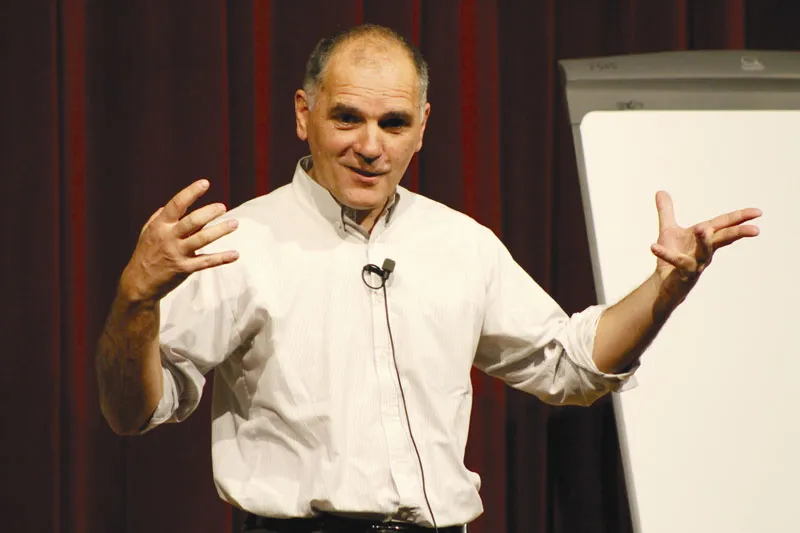
“One of Dostoevsky’s close associates said that he wrote all his works in his own blood, out of suffering that he transformed into literature. My book, too, arose from a similar suffering and astonishment at a world that, after the collapse of communism, had the opportunity to become a shared world, belonging to all of us. As a global civilization, we missed an extraordinary opportunity and turned the world toward something even worse than it had been during the Cold War,” Predrag Cicovacki, Professor of Philosophy at the College of the Holy Cross in Massachusetts, tells Novosti, discussing his book Dostoevsky and the Sanctity of Life, published in Serbian by Službeni glasnik.
Cicovacki examines the Russian writer’s metaphysical and religious approach to fundamental questions about the world and the human being. The book, written in English, was translated by Miroslav Ivanović.
Explaining his approach to Dostoevsky, the author says:
“Instead of ideological divisions, the world turned toward the lowest impulses, according to which nothing—not even human life—is sacred except private property and personal interests. This shift, in which Serbia emerged as one of the greatest losers and human life became a cheap commodity on the world market of goods—or, more accurately, slaves—inspired me to search for an alternative and find grounds for optimism. To my great surprise, I found them in Dostoevsky’s novels.”
In which of Dostoevsky’s works are the philosophical and religious dimensions most pronounced?
Dostoevsky is the most philosophical writer in the history of literature. In fact, there is no work in his entire output that lacks significant philosophical elements. The same is true of religion, because Dostoevsky’s central philosophical question concerns the human relationship with God. In his time, that relationship had become so entangled that the great majority of people were turning away from faith, although not necessarily from organized religion, while he tried to find ways to reverse this trend. The most important works in this respect are Crime and Punishment, Demons, The Idiot, and The Brothers Karamazov.
Why is Ivan Karamazov, as you say, the most unsettling character? What questions and challenges does he pose to civilization?
In the seventeenth and eighteenth centuries, religion could no longer serve as a moral guide and support in a world changing far too quickly for fossilized religious dogmas. European and Russian intellectuals rejected God en masse and placed all their faith in the power of reason to lead us toward a new, better, and more just world. Dostoevsky may not have been the first to recognize that this faith in reason was unfounded and led toward catastrophe, but through Ivan Karamazov he expressed this profound crisis of European civilization most clearly. Life is full of struggle and suffering, and if that suffering has no deeper justification, what is life for? Why endure suffering and injustice, which fill the world and which no one—not even the utterly innocent, such as children—can escape? Human reason has no answers to these questions, and this leads Ivan to despair and then madness. Ivan’s fate is also the fate of European civilization: they kill their father—symbolically, God, as Nietzsche said—and then no longer know what to do with themselves and their lives, becoming self-destructive. The history of the twentieth century confirms that Ivan, and thus Dostoevsky, was unfortunately right.
WESTERN AND RUSSIAN LITERATURE
Do contemporary American and European literature differ in how they address meaning, truth, and good and evil in human beings?
The difference is not so much between American literature on one side and European literature on the other. The deepest difference is between Western and Russian literature. To put it figuratively, Western literature is predominantly concerned with the social, horizontal dimension of reality, while Russian literature is preoccupied with God and depth psychology, the vertical dimension of reality. These two kinds of literature find their inspiration—and their pain—in different dimensions of reality, hence their very different approaches to meaning, truth, and good and evil in human beings.
How does this writer understand the problem of evil and the crossing of boundaries?
Dostoevsky recognizes that evil is very closely, even inseparably, connected with good. Essentially, the same impulse that leads toward good also leads toward evil, and vice versa, which is why evil can never be eliminated from the world. In brief, human life is bounded by rules and limits that teach us what is good and socially acceptable and what is not. The most important and profound expression of human freedom is our ability to cross those boundaries and change them. When the boundaries are artificial or outdated, crossing them is good. When they are authentic, violating them leads to evil. Being human means not only respecting boundaries but also breaking them. As Dostoevsky realized in Siberia while imprisoned alongside the worst criminals, there is no boundary that we, ordinary people, would not also cross under certain conditions. Our life is therefore, necessarily and inescapably, a mosaic of good and evil.
What are Dostoevsky’s sources of optimism? Where does he find the meaning of life that must be affirmed even in the face of evil?
Dostoevsky finds the ultimate and indestructible source of optimism in spirituality, in faith. Life itself leads us not only to cross boundaries but also to establish new ones. This is the fundamental law of life, whether we like it or not, whether we can justify it rationally or not. Alyosha understands and accepts this; Ivan does not. Alyosha places life before reason; Ivan cannot do so. Ivan has no faith: he must control and direct life according to his own interests and views, while life always takes another course. Alyosha recognizes that we must accept people as they are, and that we must accept them lovingly, with all their virtues and flaws. Life follows its own course, not our plan, full of unexpected turns, beautiful and ugly things, good and evil. Our choice is either to distrust this life and try to manipulate it, like Ivan, or to trust and accept it as it is, as a gift we have done nothing to deserve, as something sacred.
These questions remain extremely relevant today. How does the world approach, understand, and resolve them?
Like an ostrich burying its head in the sand, we refuse to engage seriously with such questions. Those who rule the world project a superficial and false picture in which the meaning of life—and success in it—is reduced to what the ancient Romans called “bread and circuses,” and every problem is “solved” by forcing others to be “with us or against us.” In this black-and-white picture of reality, the powerful apply double standards through which certain individuals and groups are declared guilty and harshly punished. Their selfish interests are cloaked in the rhetoric of justice, democracy, and human rights, while in reality no one cares about such values.
At the book presentation, we heard that it was regarded in America as one of the better books on Dostoevsky. How much attention do American literary and academic audiences give to works of this kind?
In America, very little attention is given to such works. A book like this occupies an awkward position: it belongs neither to narrowly specialized books subjected to scholarly criticism nor to entertaining books sold in airports and supermarkets whose main purpose is to distract us from the problems of existence. This kind of book creates unease and compels us to think deeply about life. It urges us to change our way of living so that we may open a path toward hope and faith, toward authentic human existence and the affirmation of life, even in the face of evil.
Read the full original interview online (in Serbian):
Source: Novosti